
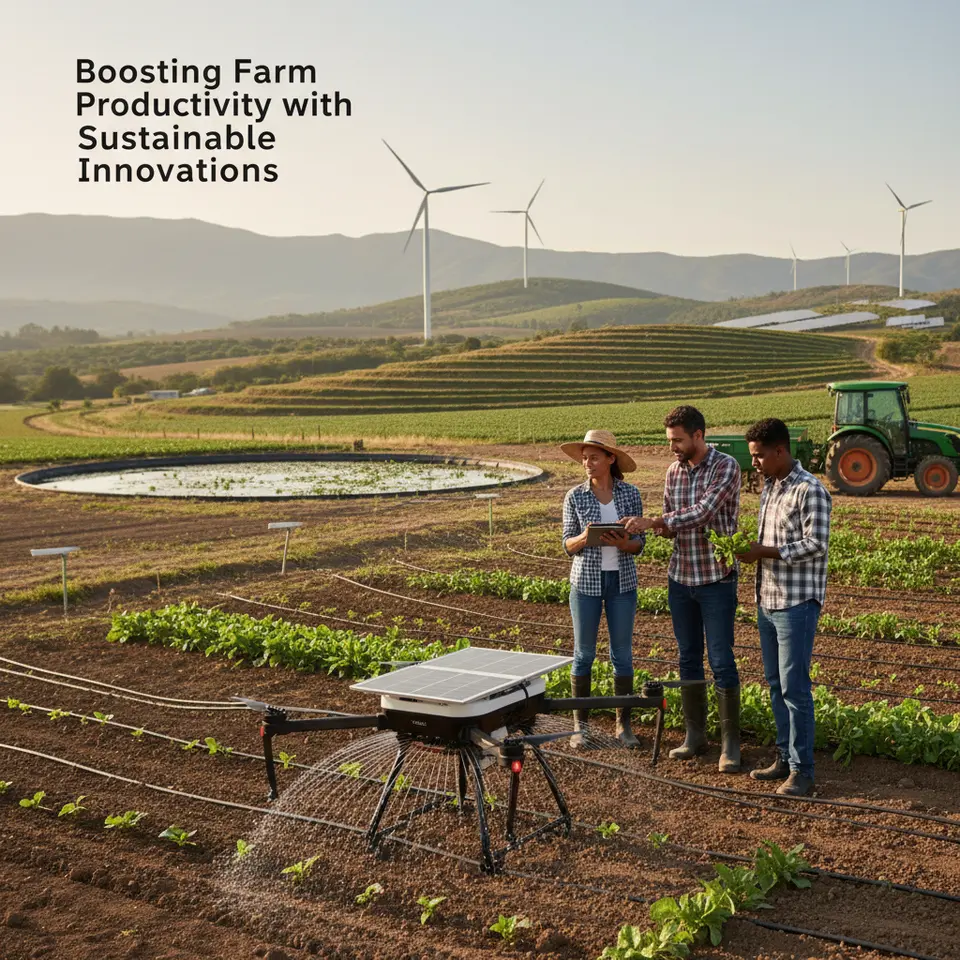
In today’s world, farmers face the dual challenge of feeding a growing population while protecting the environment. Sustainable farming has emerged as a cornerstone of modern agriculture, offering a pathway to maintain productivity without depleting natural resources. By integrating eco-friendly practices, cutting-edge technology, and regenerative approaches, producers can enhance yields and profitability in today’s digital landscape. This year (2026), the emphasis on sustainable farming is stronger than ever, driven by climate variability and market demands for responsibly grown food. Through thoughtfully designed systems that respect soil, water, and biodiversity, growers can secure their operations for the long term.
This comprehensive guide explores proven strategies that empower agricultural professionals to boost farm productivity through sustainable innovations. From precision agriculture and soil health management to water conservation and renewable energy adoption, each section examines practical steps and tools that are shaping resilient farming systems. Citing authoritative sources such as the USDA (usda.gov) and the Food and Agriculture Organization (fao.org), this article blends research insights with real-world examples. Whether you manage row crops, vegetables, or livestock, embracing sustainable farming practices today can lead to higher yields, lower input costs, and a healthier planet for future generations.
The Foundations of Sustainable Farming
Balancing Environmental, Economic, and Social Goals
Sustainable farming rests on three interdependent pillars: environmental stewardship, economic viability, and social responsibility. By preserving soil health and biodiversity, agricultural lands remain productive in the long term. Combining crop rotations, cover cropping, and integrated pest management reduces reliance on synthetic inputs and fosters ecosystem services. Economically, lower chemical expenditures and efficient resource use translate to healthier profit margins. Socially, robust farming systems support rural communities by creating secure livelihoods, ensuring equitable access to land, and fostering knowledge-sharing networks.
Implementing Core Agroecological Practices
To lay the groundwork for sustainable farming, practitioners begin with soil-friendly techniques. Crop rotation disrupts pest cycles and balances nutrient demands. Cover crops, like clover or rye, suppress weeds, prevent erosion, and enhance organic matter when terminated. Organic amendments such as compost or well-managed manure improve structure and water-holding capacity. Encouraging beneficial insects through floral strips or habitat buffers strengthens natural pest control. These agroecological practices work in concert, creating self-regulating systems that build resilience against weather extremes and disease outbreaks.
Implementing Precision Agriculture Technologies
Harnessing Real-Time Data Collection
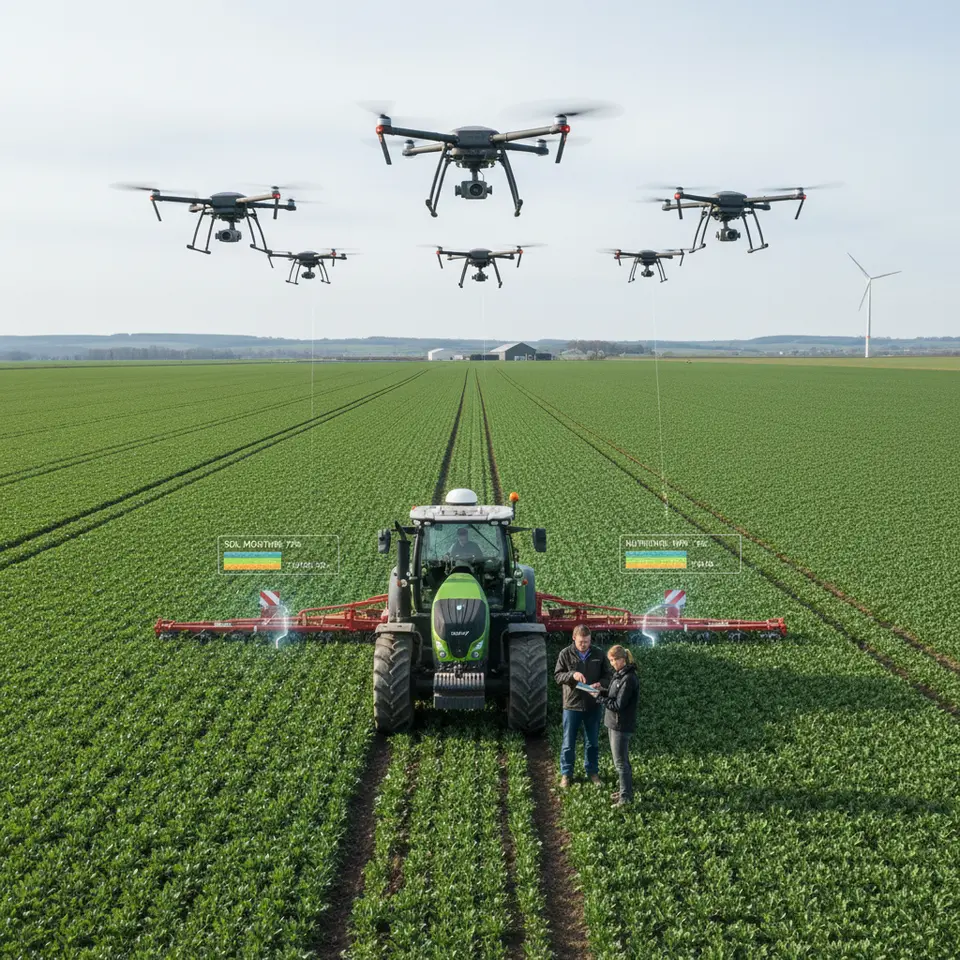
Precision agriculture empowers growers with detailed insights into field conditions, soil moisture, and crop health. IoT sensors buried in the soil measure water content and nutrient levels, while drones equipped with multispectral cameras detect stress before symptoms appear. GPS-enabled tractors map field variability, capturing yield data during harvest. By gathering this information in real time, farmers can tailor interventions precisely where and when they are needed, driving sustainable farming to new levels of efficiency.
Variable-Rate Application and Automated Systems
Variable-rate technology (VRT) integrates data from sensors and maps to adjust fertilizer, seed, and pesticide applications on the go. Instead of uniform blanket treatments, equipment calibrates flow rates per zone, optimizing resource use and reducing excess runoff. Automated irrigation controllers sync with soil moisture sensors and weather forecasts, activating drip lines or sprinklers only when necessary. Studies from institutions such as the University of California, Davis, demonstrate that VRT can reduce input costs by up to 30% while maintaining or improving yields. Adopting these tools not only boosts productivity but also mitigates the environmental footprint of agriculture.
Strengthening Soil Health for Optimal Yields
Minimizing Disturbance and Enhancing Structure
Healthy soil is the cornerstone of sustainable farming. No-till or reduced-till methods preserve soil aggregates and protect microbial communities essential for nutrient cycling. By leaving crop residues on the surface, erosion is curtailed and organic matter gradually accumulates. Beneficial organisms, from earthworms to mycorrhizal fungi, flourish in undisturbed soil, improving porosity and water infiltration. Over time, these biological processes foster robust root systems capable of accessing deeper moisture and nutrients, enhancing resilience against drought.
Leveraging Organic Amendments and Cover Cropping
Introducing organic matter through compost and green manures further elevates soil fertility. Cover crops such as legumes fix atmospheric nitrogen, reducing the need for synthetic fertilizers. Deep-rooted species, like daikon radish, break compaction layers and recycle subsoil nutrients to the surface. When terminated, cover crop residues feed soil organisms and gradually release nutrients during decomposition. Continuous monitoring of soil organic carbon, as recommended by the USDA Natural Resources Conservation Service, helps track progress and guide management decisions. Investing in long-term soil health pays dividends in yield stability and quality harvests.
Advancing Water Efficiency and Conservation Strategies
Optimizing Irrigation for Maximum Impact
Agriculture remains the largest consumer of freshwater globally, accounting for nearly 70% of withdrawals. Sustainable farming demands smarter water use through drip and micro-spray systems, which deliver water directly to root zones while minimizing evaporation. Soil moisture sensors integrated with automated controllers ensure irrigation events occur only when thresholds are met. Farmers can program systems to follow weather-driven schedules, preventing overwatering and nutrient leaching. Recent research highlights that precision irrigation can reduce water use by over 40% without sacrificing yield.
Harnessing Rainwater and Reusing Runoff
Complementing efficient irrigation, rainwater harvesting systems capture runoff from roofs and impermeable surfaces into storage tanks or ponds. This practice diversifies water sources and reduces reliance on groundwater. Constructed wetlands or vegetative swales treat farm runoff, filtering nutrients before returning water to fields or nearby waterways. Implementing these nature-based solutions strengthens farm resilience during dry spells—critical in regions experiencing variable rainfall this year (2026).
Harnessing Renewable Energy and Digital Tools on the Farm
Deploying Clean Energy Systems
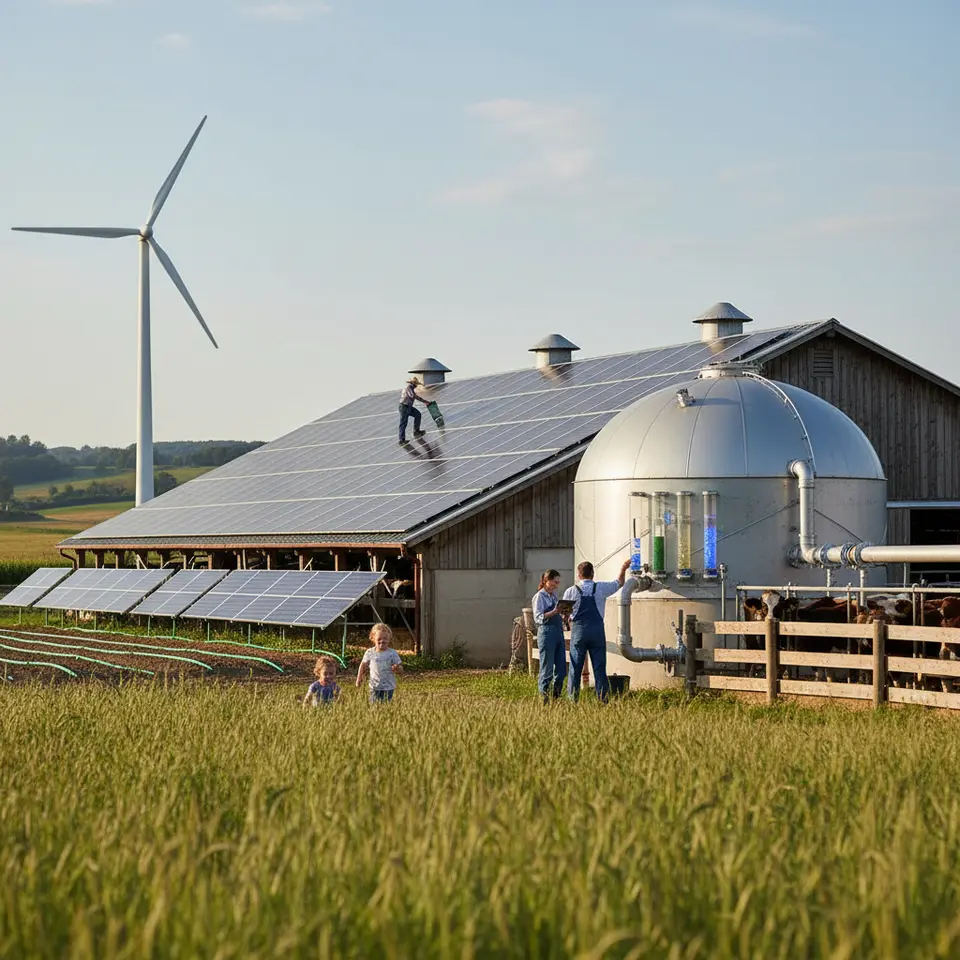
Generating on-site renewable energy drives down operational costs and cuts carbon emissions. Solar arrays mounted on barn roofs or above irrigation channels power pumps, lighting, and processing equipment. Small-scale wind turbines can complement solar during low-sun periods. Biogas digesters convert livestock manure into methane, providing heat or electricity while mitigating greenhouse gas emissions. Government incentive programs, such as those offered by USDA Rural Development, support the adoption of renewable installations and can significantly shorten payback periods.
Integrating Farm Management Software
In today’s digital landscape, farm management software centralizes data from machinery, sensors, and financial records into intuitive dashboards. Platforms provide predictive analytics for yield forecasting, input optimization, and risk assessment. Mobile apps facilitate real-time task assignments, equipment maintenance alerts, and compliance reporting. By using technology to streamline operations, producers can focus on strategic planning and continuous improvement of sustainable farming practices.
FAQ
What are the three pillars of sustainable farming?
Sustainable farming rests on environmental stewardship, economic viability, and social responsibility—assuring long-term productivity, profit, and community well-being.
How does precision agriculture enhance sustainability?
By using IoT sensors, drones, GPS mapping, variable-rate technology, and automated systems, precision agriculture tailors inputs precisely, boosting efficiency and reducing environmental impact.
Why is soil health crucial for farm productivity?
Healthy soils retain water, support microbial communities, and foster strong root systems. Practices like no-till, cover cropping, and organic amendments build structure and fertility for higher yields.
Conclusion
Sustainable farming offers a compelling framework for maximizing productivity while safeguarding vital natural resources. Through intentional practices—ranging from precision agriculture and soil regeneration to water conservation and renewable energy—farmers can achieve resilient and profitable operations. By embracing innovation and leveraging data-driven insights, agricultural professionals respond effectively to the challenges of climate variability and consumer expectations. Cultivating sustainable systems today ensures that the land remains fertile, water stays clean, and communities thrive this year (2026) and beyond. As research institutions and government agencies continue to advance best practices, the future of farming will depend on our collective commitment to stewardship, efficiency, and prosperity for generations to come.
