
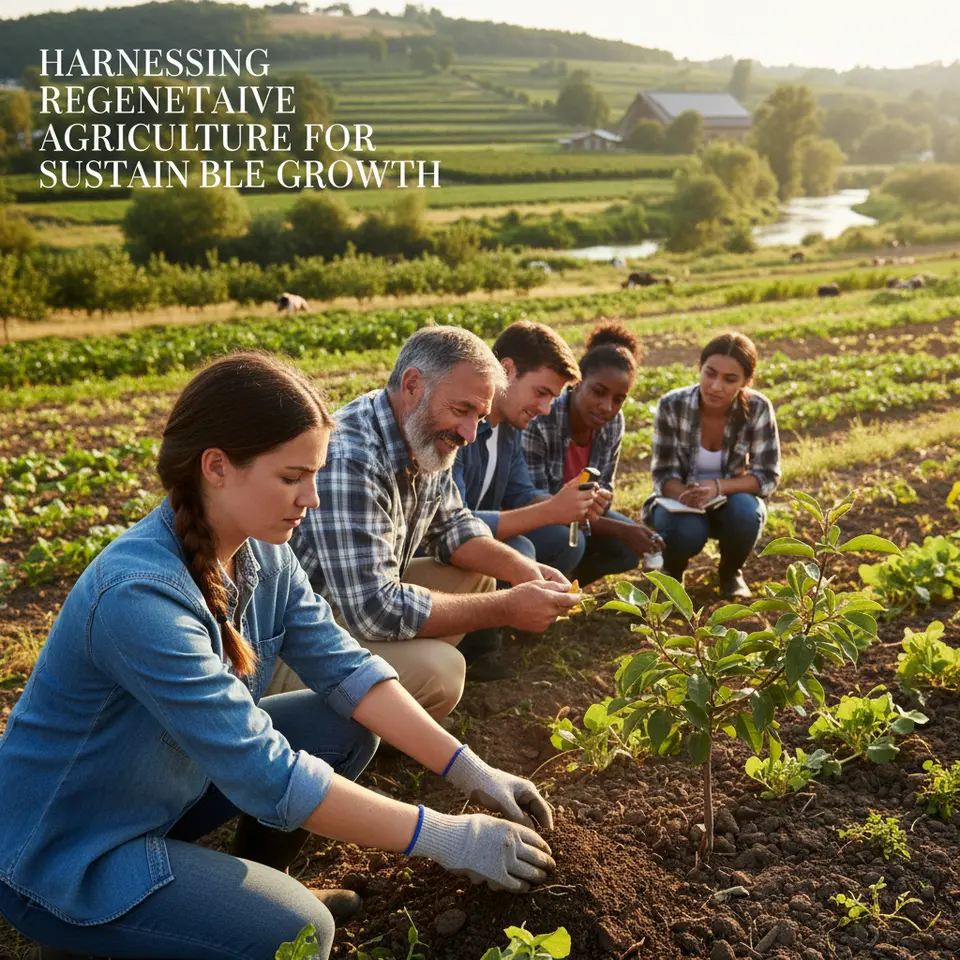
Farmers face mounting environmental pressures and rapid economic shifts. Harnessing regenerative agriculture offers a proven path to restore ecosystems, boost crop yields, and secure long-term profitability.
This comprehensive guide explores how regenerative agriculture transforms traditional farming into a resilient, profitable enterprise. You will discover actionable steps to improve soil health, increase biodiversity, and master carbon sequestration, ensuring your farm achieves sustainable growth and lasting ecological balance.
The Fundamentals of Regenerative Agriculture
Farming practices dictate the future of our global food supply. Regenerative agriculture represents a paradigm shift from extractive conventional methods to a restorative, ecosystem-first approach. By focusing on reviving the land rather than simply stripping it of resources, regenerative agriculture builds a foundation for perpetual agricultural success.
This methodology relies on working with nature. It minimizes chemical inputs and maximizes the biological output of the land. When you apply regenerative agriculture, you actively rebuild topsoil, enhance local ecosystems, and improve the water cycle. You also protect your financial assets by reducing reliance on expensive fertilizers and pesticides. Exploring advanced agronomy techniques can help you tailor these principles to your specific climate and crop types.
Mini-Conclusion: Adopting regenerative agriculture is not merely an environmental choice; it is a vital business strategy. Rebuilding your ecological foundation ensures consistent, high-quality yields for generations to come.
Revitalizing Soil and Strengthening Foundations
Healthy soil serves as the cornerstone of every thriving agricultural enterprise. Regenerative agriculture focuses on rebuilding organic matter, enhancing soil structure, and cultivating a vibrant microbial community. By minimizing disturbance and supporting the soil food web, farmers can create a self-sustaining environment that supplies nutrients naturally, retains moisture, and sequesters carbon.
No-Till Planting for Minimal Disturbance
No-till planting eliminates the need to invert or plow the soil, preserving its natural layers and the habitats of beneficial organisms. Producers report that reduced tillage limits erosion, conserves soil organic matter, and lowers fuel and labor costs. Equipment options range from specialized coulters to precision planters that gently place seeds into undisturbed ground. As highlighted by the U.S. Department of Agriculture, no-till systems can sequester up to one ton of carbon per acre annually while maintaining or increasing crop yields under diverse conditions.
Organic Amendments and the Soil Food Web
Applying high-quality compost enriches soil with humus, essential nutrients, and improved moisture-holding capacity. Composted materials also introduce diverse fungal and bacterial communities crucial for nutrient cycling. Studies from land-grant universities show that targeted compost applications can improve water infiltration rates by more than 20% across multiple trial sites. Incorporating other organic amendments—such as biochar, worm castings, and green manures—enhances the balance of carbon to nitrogen, supporting robust plant growth and longer-term soil resilience.
Living Roots and Continuous Coverage
Maintaining living roots in the ground as often as possible feeds soil organisms and protects the surface from erosion. Species like clover, rye, and radish not only reduce compaction and regulate temperature but also exude sugars and amino acids that fuel microbial activity. Over time, this continuous ground cover builds a stable soil structure, reduces dependence on synthetic fertilizers, and creates a foundation for healthier cash crops the following season.
Optimizing Water Management for Resilience
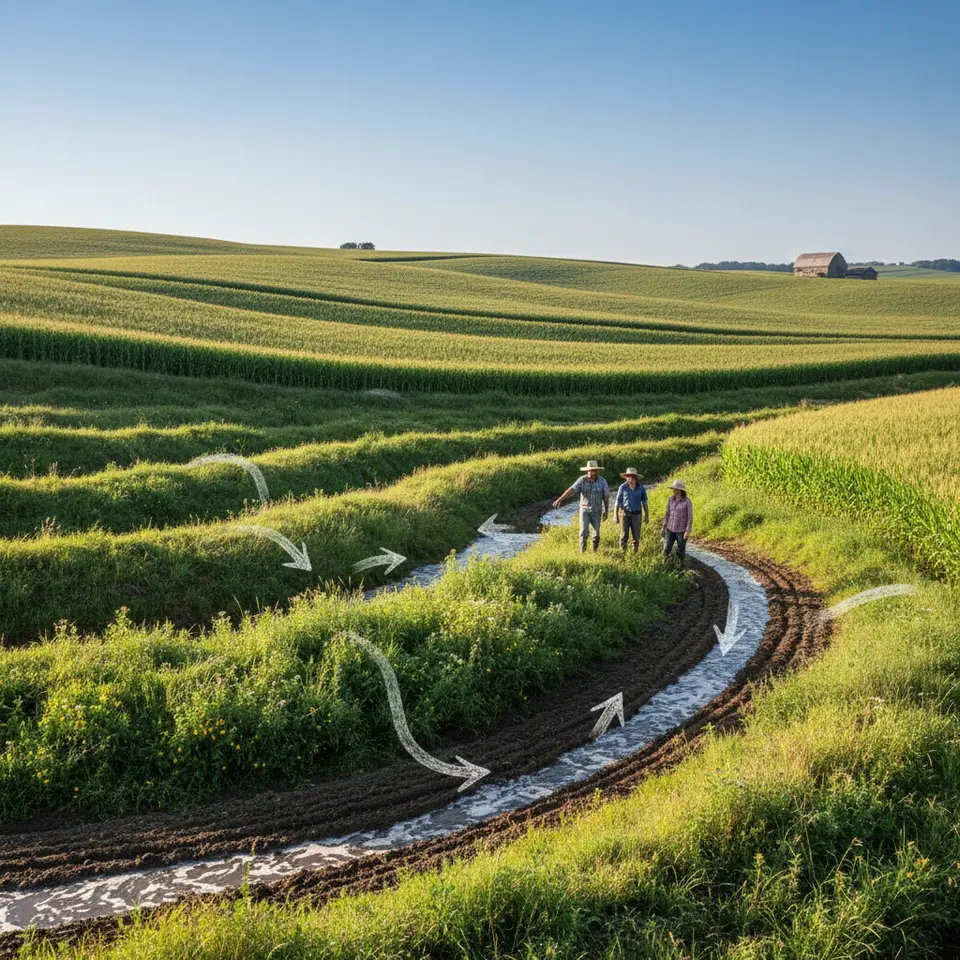
Water scarcity and erratic rainfall patterns are significant challenges in modern agriculture. Implementing regenerative water management techniques helps capture and conserve moisture, reduce irrigation costs, and protect downstream ecosystems by minimizing runoff and sedimentation.
Contour Farming and Swales
Contour farming involves planting along the natural contours of sloped land, which slows water flow and encourages infiltration. Swales—shallow, vegetated ditches on contour lines—act like sponges that capture runoff and release it slowly back into the soil. These earthworks can be implemented without heavy machinery and provide immediate benefits in water retention and erosion control.
Mulching and Living Ground Covers
Applying organic mulches—straw, wood chips, or cover crop residues—reduces evaporation by shading the soil surface. Living ground covers, such as low-growing legumes or grasses, also protect against direct sunlight and enhance moisture capture through root channels. Together, these strategies maintain more stable soil moisture levels, even during dry spells.
Precision Irrigation Technologies
Advances in sensor technology, remote monitoring, and automated control systems allow growers to apply water only where and when it is needed. Soil moisture sensors, combined with weather data and plant stress indicators, inform drip and micro-sprinkler systems to optimize distribution. Research from the Food and Agriculture Organization confirms that precision irrigation can reduce water use by up to 50% while sustaining or improving yields.
Regenerative Agriculture vs. Conventional Farming
Understanding the contrast between these two systems highlights the urgent need for transition.
|
Feature |
Conventional Farming |
Regenerative Agriculture |
|---|---|---|
|
Soil Approach |
Chemically treated, heavily tilled |
Biologically active, minimal disturbance |
|
Crop Diversity |
Extensive monocultures |
Diverse rotations, cover crops, polycultures |
|
Pest Control |
Synthetic pesticides and herbicides |
Natural predators, diverse habitats, IPM |
|
Carbon Impact |
Net emitter of greenhouse gases |
Net sink through carbon sequestration |
|
Livestock |
Confined feeding operations (CAFOs) |
Adaptive rotational grazing on pasture |
|
Water Use |
High runoff, poor retention |
High infiltration, excellent retention |
Enhancing Biodiversity Across the Farm Ecosystem
Biodiversity is a vital component of regenerative agriculture. A diverse farm ecosystem supports beneficial insects, microbes, and wildlife, creating natural checks and balances that reduce pest pressures and improve nutrient cycling.
Intercropping and Polycultures
Planting multiple species together—such as legumes with grains or brassicas with flowering plants—can maximize resource use and break pest cycles. Intercropping introduces diversity in root architecture, nutrient demands, and canopy cover, which helps suppress weeds, reduce disease incidence, and improve soil health through varied organic inputs.
Agroforestry and Riparian Buffers
Incorporating trees and shrubs into crop or pasture lands provides multiple layers of vegetation that stabilize soils, sequester carbon, and offer habitat for birds and beneficial insects. Riparian buffers—strips of native vegetation along waterways—filter runoff, prevent erosion, and support aquatic biodiversity. These living systems also contribute to climate resilience by reducing temperature extremes on the farm.
Pollinator Habitat and Beneficial Insects
Establishing dedicated pollinator strips and insectary plantings attracts bees, butterflies, and predatory insects that control pests naturally. Flowers like phacelia, buckwheat, and alyssum bloom throughout the growing season, ensuring a continuous food supply for pollinators and predatory species. This approach reduces dependence on chemical pesticides and promotes a balanced farm food web.
Designing Dynamic Cropping Systems
Dynamic cropping systems, which integrate cover crops, rotations, and relay planting, optimize nutrient cycling, pest management, and market diversification. A well-designed rotation balances deep- and shallow-rooted species, alternates nutrient demands, and disrupts weed and disease cycles.
Cover Crop Diversity and Timing
Selecting a mix of legumes, grasses, and brassicas enables multiple functions: nitrogen fixation, nutrient scavenging, weed suppression, and erosion control. Timing termination based on soil moisture, temperature, and crop requirements ensures that cover crops deliver maximum benefits without interfering with cash crop establishment.
Complex Rotations for Nutrient Balance
Rotations spanning four to six years—such as corn-soybean-wheat-oats with winter cover crops—help distribute nutrient uptake and return. Including deep-rooted species like alfalfa or sunflower improves subsoil structure and captures nutrients that would otherwise leach below the root zone. These sequences reduce fertilizer inputs and enhance long-term soil fertility.
Relay Cropping and Intersections
Relay cropping overlaps the growth of successive species, ensuring continuous groundcover and extending the period of active root growth. For example, planting a quick-maturing grain into a maturing legume stand can maximize land use and improve early-season soil protection. This method requires careful timing and equipment adaptation but yields additional biomass and revenue streams.
Integrating Livestock, Carbon Sequestration, and Technology
Holistic integration of livestock into cropping systems, combined with modern data tools, accelerates soil regeneration and opens new economic opportunities through carbon markets and sustainable branding.
Planned Grazing and Nutrient Cycling
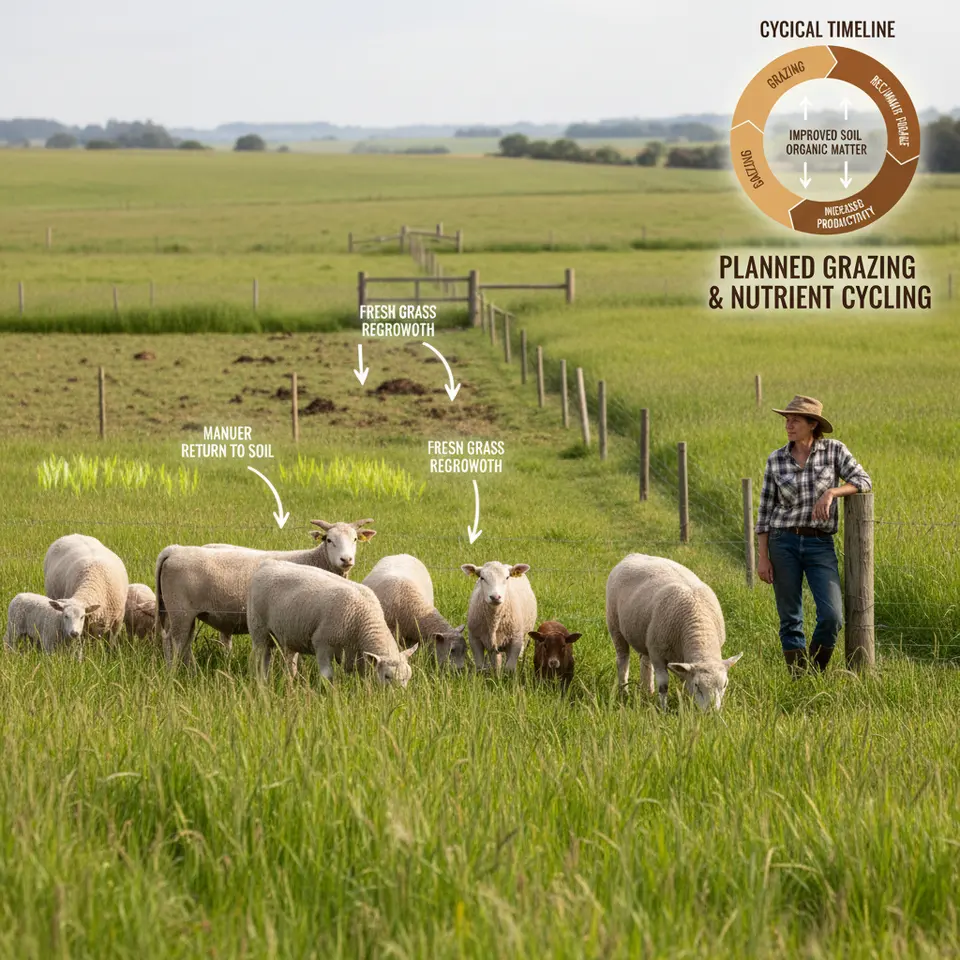
Managed rotational grazing mimics natural herd movements, distributing manure evenly and stimulating pasture regrowth. Multi-species grazing—such as sheep and cattle together—leverages different foraging habits to optimize forage use and reduce parasite loads. This system builds soil organic matter, enhances pasture productivity, and decreases feed and fertilizer expenses.
Carbon Markets and Measurement Protocols
Regenerative practices like no-till, cover cropping, and agroforestry can sequester atmospheric CO₂ in soil organic carbon pools. Credible measurement protocols, supported by remote sensing and soil sampling, enable participation in verified carbon markets. Farmers can earn carbon credits for long-term soil building, creating a new revenue stream while contributing to climate mitigation.
Digital Platforms and Decision Support
In today’s digital landscape, sensors, drones, and mobile apps provide real-time data on soil moisture, nutrient status, and biomass growth. Open-source platforms and machine learning models help predict pest outbreaks, optimize cover crop blends, and refine grazing routines. These tools reduce guesswork, accelerate learning curves, and scale regenerative outcomes across diverse farm sizes.
Conclusion
Regenerative agriculture offers a comprehensive framework for building healthy soils, conserving water, enhancing biodiversity, and strengthening farm resilience. By adopting no-till planting, diverse cover crops, planned grazing, and precision technologies, producers can transform degraded landscapes into productive ecosystems that sequester carbon and reduce input costs. Community-supported markets, green certifications, and carbon credit programs provide economic incentives that align conservation goals with profitability. As global challenges like climate change and food security intensify, regenerative agriculture stands out as a practical, science-based pathway for sustainable growth. Today is the moment to connect with local extension services, participate in on-farm demos, and start small pilot projects on your land. Each seed sown, soil biological network restored, and livestock rotation planned brings us closer to a healthier planet and more prosperous rural communities this year. Embrace regenerative principles and join the movement toward lasting agricultural resilience.
Frequently Asked Questions
1. What is regenerative agriculture?
Regenerative agriculture is a holistic farming system focused on restoring soil health, enhancing local biodiversity, and improving the water cycle. It aims to rehabilitate the environment while maintaining profitable agricultural production.
2. How does regenerative agriculture improve soil health?
It improves soil health by minimizing mechanical tillage, maximizing crop diversity, and keeping living roots in the ground year-round. These practices feed the soil microbiome and increase vital organic matter.
3. What role does carbon sequestration play in this farming method?
Carbon sequestration is a major benefit of regenerative agriculture. Plants pull carbon dioxide from the air and store it in the soil as organic carbon, which mitigates climate change and enriches the earth.
4. Why is biodiversity important in regenerative agriculture?
Biodiversity breaks pest and disease cycles naturally. A diverse range of plants, insects, and microorganisms creates a balanced, resilient ecosystem that requires fewer synthetic chemical inputs to thrive.
5. How does rotational grazing work?
Rotational grazing involves moving livestock frequently between small pasture subdivisions. This prevents overgrazing, allows plants time to recover, and evenly distributes natural fertilizer across the land.
6. Can regenerative agriculture save farmers money?
Yes. While the transition period requires investment, regenerative agriculture drastically reduces long-term operational costs by eliminating the need for expensive synthetic fertilizers, pesticides, and heavy mechanical tillage.
7. Is regenerative agriculture different from organic farming?
While they share similarities, organic farming primarily focuses on avoiding synthetic chemicals. Regenerative agriculture goes further by actively focusing on rebuilding topsoil, restoring ecosystems, and sequestering carbon.
8. How long does it take to see results from these practices?
Initial improvements in water infiltration and soil structure can be seen within the first year. However, significant increases in deep soil organic matter and full ecosystem balance typically take three to five years.
9. Can large-scale farms adopt regenerative agriculture?
Absolutely. Many large-scale commercial operations successfully implement regenerative agriculture by using no-till planters, broad-acre cover cropping, and integrated livestock management at scale.
10. Do I need special equipment to start?
While tools like no-till seed drills are helpful, you can begin adopting regenerative agriculture simply by changing your management practices. Reducing chemical inputs, diversifying crop rotations, and planting cover crops are excellent starting points.
