
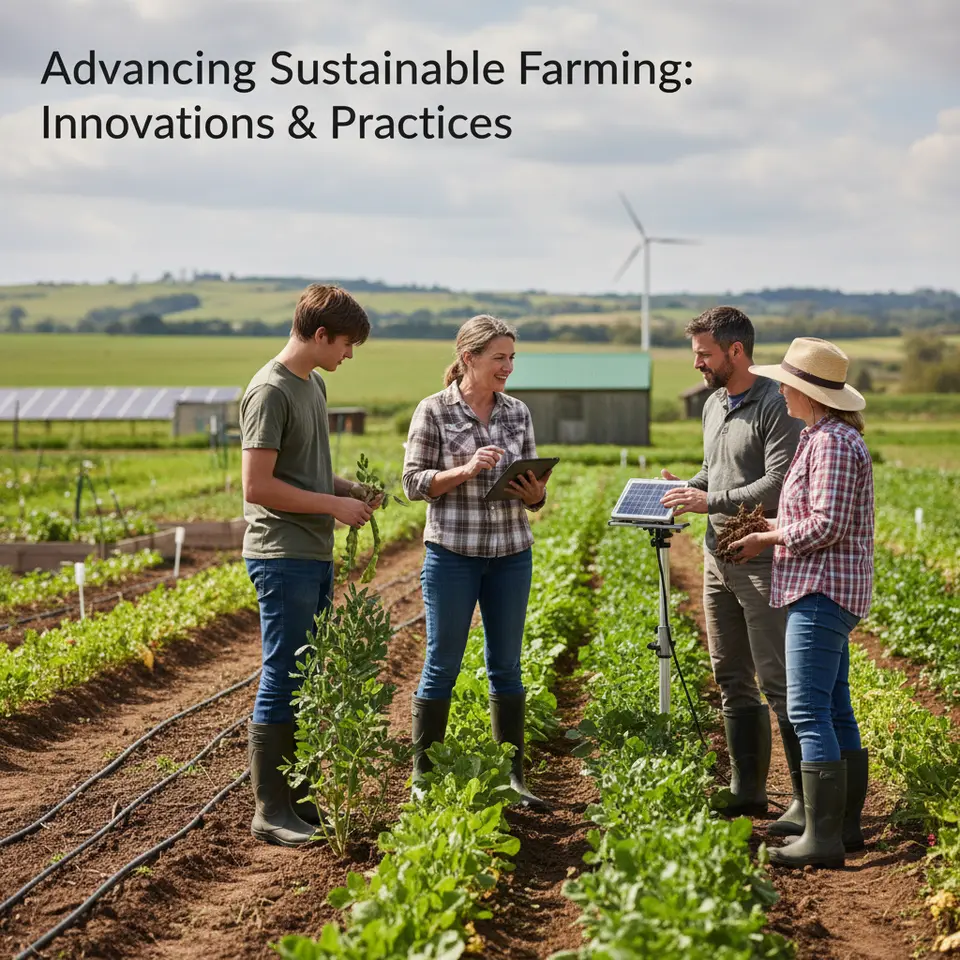
In the modern era, sustainable farming represents a paradigm shift, seamlessly transforming education through calm and focus while preserving our planet’s vital ecosystems for future generations.
Sustainable farming bridges the gap between environmental stewardship and educational mindfulness. By engaging with these practices, individuals learn patience, ecological balance, and resource management. This comprehensive guide explores fundamental techniques, advanced methodologies, and the profound impact of eco-conscious agriculture on both local communities and global ecosystems.
The Intersection of Agricultural Innovation and Mindful Education
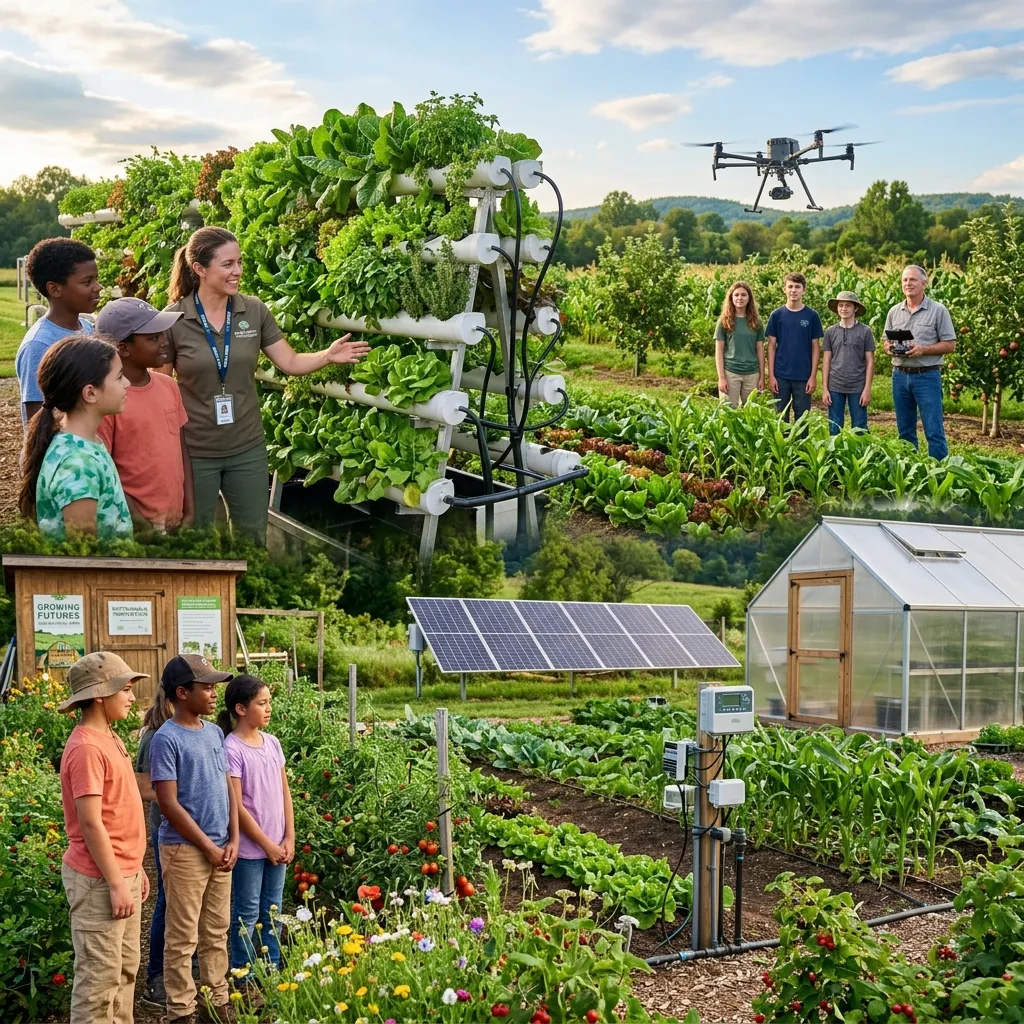
The philosophy behind sustainable farming goes far beyond simply growing crops. It requires a deep, educational approach that teaches practitioners how to observe, adapt, and work harmoniously with nature. When students and farmers alike engage in these practices, they develop a profound sense of calm and focus. The methodical nature of tending to crops, understanding weather patterns, and managing natural resources fosters an educational environment where critical thinking and patience thrive. This method of food production encourages a hands-on learning experience that connects human beings directly to the earth, creating a calming, focused state of mind that translates to better decision-making and heightened environmental awareness.
By integrating agricultural education into community programs, schools, and local initiatives, we create a structured pathway for lifelong learning. The principles of sustainable farming dictate that every action has a reaction within the ecosystem. Observing these natural cycles helps individuals understand complex biological systems, teaching them to approach problems with a calm, focused, and analytical mindset. This educational transformation is crucial for developing the next generation of environmental stewards who are equipped to handle the pressing challenges of climate change and resource depletion.
Regenerative Practices for Soil Health
Regenerative agriculture sits at the heart of sustainable farming, prioritizing techniques that rebuild soil organic matter, foster microbial diversity, and restore ecosystem functions. By minimizing soil disturbance through no-till or reduced-till methods, farmers preserve critical fungal networks that facilitate nutrient cycling and water infiltration. This year (2026), many producers are adopting cover cropping strategies—planting species like clover, rye, and mustard during fallow periods—to capture residual nutrients, reduce erosion, and sequester atmospheric carbon.
Cover crops not only act as living mulches but also support a balanced soil food web, encouraging populations of beneficial nematodes and earthworms. When fields are rotated with different cover crop mixes, farmers optimize nitrogen fixation and disrupt pest and disease cycles naturally. Complementary to cover cropping, rotational grazing in pasture systems imitates natural herd movements, evenly distributing manure and stimulating regenerative plant growth. This synergy boosts water retention, enhances root depth, and elevates forage quality for livestock.
Key institutions like the USDA Natural Resources Conservation Service have documented the long-term benefits of regenerative interventions, revealing yield increases of up to 20% while reducing synthetic input requirements. By integrating compost applications and diverse cropping sequences, operations of all scales can anchor carbon in the soil and improve drought resilience. In practice, sustainable farming rooted in regenerative soil health not only drives profitability but also nurtures a living foundation that supports ecosystems, climate stability, and future harvests.
Precision Agriculture and Technological Advances
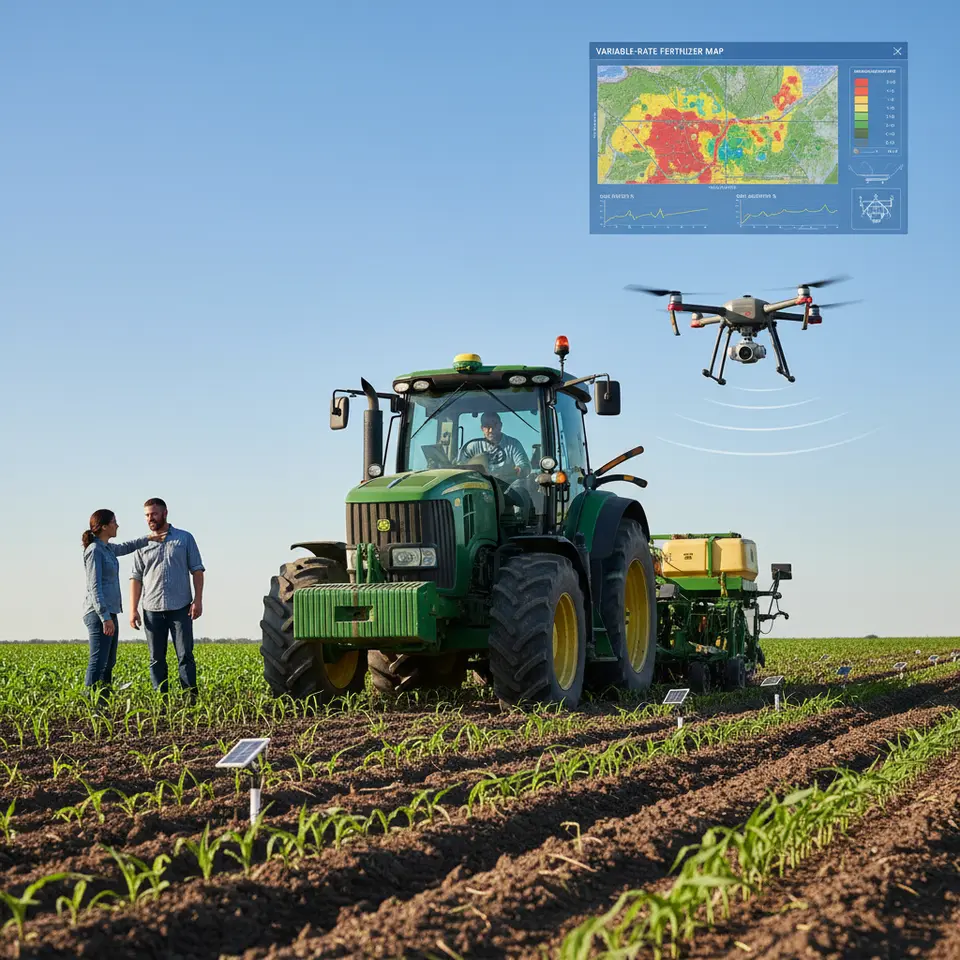
In the realm of sustainable farming, precision agriculture technologies are revolutionizing how inputs are measured, managed, and applied. By harnessing GPS-guided tractors, variable rate technology (VRT), and advanced sensor networks, farmers deliver water, seeds, and agrochemicals exactly where they are needed—reducing waste and environmental impact. This year (2026), the integration of unmanned aerial vehicles (UAVs) equipped with multispectral cameras has become increasingly common, allowing producers to spot early signs of nutrient deficiencies, pest outbreaks, or disease stress before symptoms become visible to the naked eye.
Satellite imagery and remote sensing platforms, such as those provided by NASA Earthdata, feed critical data into farm management software. Prescription maps generated from this information guide variable rate sprayers and seed drills, optimizing application rates across heterogeneous field zones. As a result, sustainable farming operations can cut chemical runoff and lower input costs by up to 30%.
Further innovations include soil moisture sensors that transmit real-time readings to cloud dashboards, enabling fine-tuned irrigation scheduling that matches crop evapotranspiration rates. Machine learning algorithms analyze historical and live data streams to forecast yield potential and flag emerging issues. In today’s digital landscape, mobile apps and decision-support platforms empower growers to adjust practices on the go, fostering an agile approach to field management. By embracing precision agriculture, farms enhance both economic returns and ecological outcomes, solidifying the role of sustainable farming as a data-driven, resource-efficient model for the future.
Structured Comparison: Traditional vs. Sustainable Methods
Understanding the differences between conventional agriculture and eco-friendly approaches highlights the necessary shift in our food production systems.
|
Feature |
Traditional Agriculture |
Sustainable Farming |
|---|---|---|
|
Primary Focus |
Maximum immediate yield and profit |
Long-term ecological balance and steady yield |
|
Input Reliance |
High reliance on synthetic fertilizers and pesticides |
Low reliance; uses compost, natural predators |
|
Water Usage |
High consumption, often leading to runoff |
High efficiency, focus on retention and recycling |
|
Land Management |
Monoculture, frequent deep tilling |
Polyculture, minimal or no-till practices |
|
Carbon Impact |
Net emitter of greenhouse gases |
Aims for carbon sequestration and neutrality |
|
Economic Model |
Dependent on external inputs and subsidies |
Focused on self-sufficiency and local markets |
Pro Tips for Implementing Eco-Friendly Systems
Transitioning to sustainable farming requires patience, observation, and a willingness to adapt. Here are expert insights to guide your journey:
- Start Small: Begin by implementing one or two new practices, such as composting or cover cropping, before attempting a complete farm overhaul.
- Observe Your Land: Spend time studying the natural topography, water flow, and sunlight patterns on your property to make informed design decisions.
- Build Community: Connect with local farming cooperatives or extension offices. According to research from the USDA (https://www.usda.gov), local knowledge sharing is critical for agricultural success.
- Focus on the Dirt: Always prioritize the health of the earth beneath your feet. Feed the soil, and the soil will feed the plants.
- Diversify Income Streams: Protect your farm’s economic viability by growing a variety of crops and exploring value-added products like jams or natural dyes.
Common Mistakes to Avoid in Agricultural Planning
Even well-intentioned practitioners can stumble when transitioning to sustainable farming. Avoid these common pitfalls to ensure a successful operation:
- Over-tilling: Excessive plowing destroys the microbial networks in the earth, leading to compaction and erosion. Shift toward minimal tillage practices.
- Ignoring Local Ecology: Trying to grow crops that are not suited to your specific climate or hardiness zone will result in constant struggles against nature.
- Neglecting Record Keeping: Failing to track crop yields, weather patterns, and financial data makes it impossible to evaluate what is working and what needs adjustment.
- Underestimating Labor Needs: Eco-friendly practices often require more hands-on labor than chemically intensive methods. Plan your workforce accordingly.
- Relying on a Single Crop: Monocultures are highly susceptible to pests and diseases. Always aim for a diverse planting strategy to mitigate risk.
Embracing these methodologies requires a fundamental shift in how we view our relationship with the natural world. Through careful observation, dedicated practice, and a commitment to ongoing education, we can cultivate landscapes that provide abundant harvests while maintaining ecological integrity.
To secure a healthy planet for future generations, we must completely integrate sustainable farming into our daily lives and educational systems. By prioritizing ecological harmony, we not only produce healthier food but also cultivate a mindset of calm, focus, and environmental responsibility. Start today by supporting local eco-conscious farmers or initiating a small community garden in your neighborhood.
Water Management and Conservation Techniques
Water scarcity presents one of the most formidable challenges in sustainable farming. To respond effectively, producers are adopting innovative irrigation and conservation methods that optimize every drop. Drip irrigation systems, for instance, deliver water directly to plant root zones, cutting evaporation losses by up to 60% compared to traditional flood or furrow irrigation. Soil moisture probes integrated with IoT networks provide continuous feedback on water availability, triggering automated controllers to irrigate only when moisture levels fall below crop-specific thresholds.
Rainwater harvesting systems capture runoff from greenhouse roofs and barn structures, storing it in cisterns or earthen ponds for on-demand use. This strategy not only buffers against dry spells but also reduces reliance on municipal or groundwater supplies. Meanwhile, mulching with straw, wood chips, or biodegradable polymers helps retain soil moisture, regulate temperature fluctuations, and suppress weed growth—all contributing to improved irrigation efficiency.
Research from the U.S. Geological Survey (USGS) underscores the value of combining these practices, indicating potential water savings of 40–50% in well-managed systems. As climate variability intensifies, water-smart decisions become indispensable for resilient sustainable farming. By integrating sensor-based controls, alternative water sources, and surface coverage techniques, farmers can maintain optimal crop health, conserve vital resources, and future-proof operations against increasing hydrological uncertainty.
Integrating Trees and Crops: Agroforestry Systems
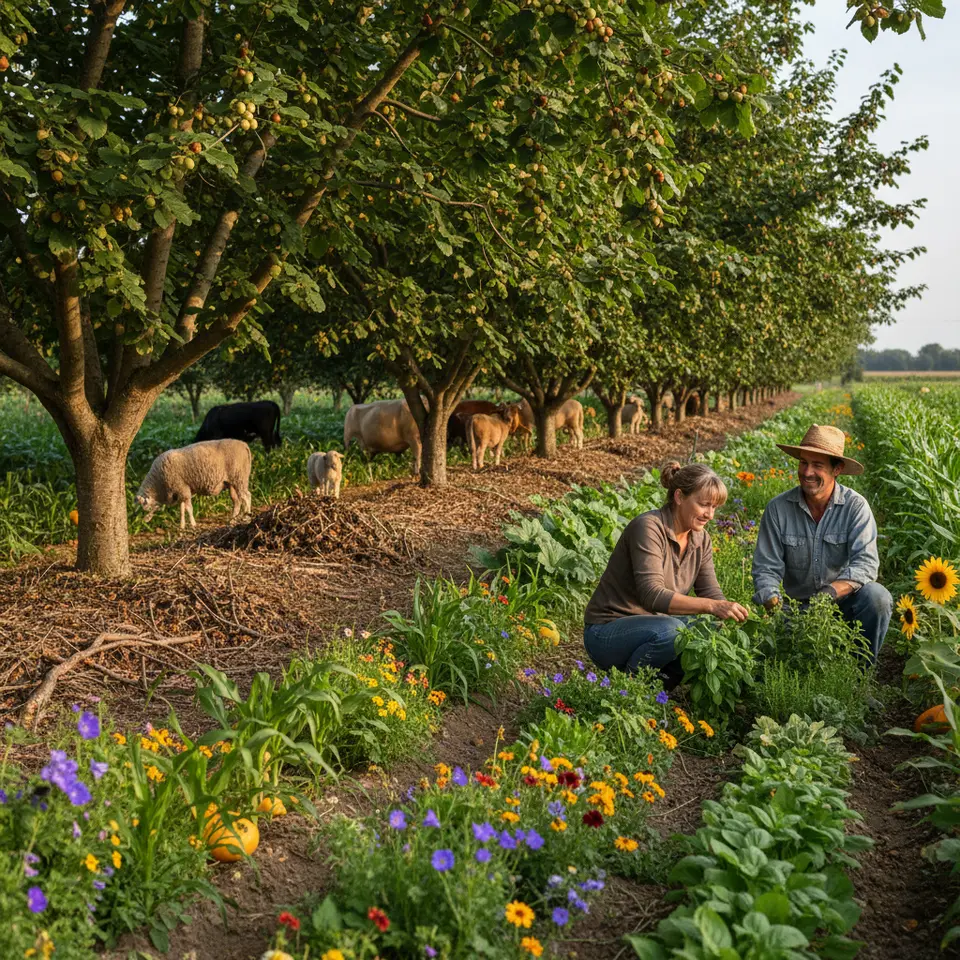
Agroforestry exemplifies a multifaceted approach to sustainable farming by weaving woody perennials into crop and livestock operations. In alley cropping, rows of deep-rooted trees—such as hazelnut, walnut, or paulownia—are alternated with annual crops. This arrangement enhances nutrient cycling, as tree roots tap into subsoil minerals and redistribute them through leaf litter, benefiting neighboring plants. The shade provided can moderate microclimates, reducing heat stress in sensitive crops while supporting beneficial insect habitats.
Silvopasture systems combine tree cover with grazing pastures, offering livestock shade, wind protection, and supplementary forage from fodder shrubs. These trees act as carbon sinks, sequestering significant amounts of CO₂ while diversifying farm income streams through timber, fruit, or nut harvests. Polyculture plantings—intercropping cereals with legumes, cover crops, or companion species like marigolds and basil—can naturally deter pests, enhance soil structure, and optimize sunlight interception.
In today’s digital landscape, sustainable farming operations use GIS mapping tools to design agroforestry layouts that maximize biodiversity corridors and water management. Field trials at leading research institutions demonstrate yield stability improvements of 10–15% when agroforestry principles are integrated. Furthermore, this blended land-use model strengthens ecological networks, supports pollinators, and fosters long-term resilience against climatic extremes, highlighting its pivotal role in progressive sustainable farming strategies.
Enhancing Nutrients with Organic Amendments
Organic soil amendments play a central role in sustainable farming by enriching fertility and promoting a dynamic soil microbiome. Compost produced from crop residues, green waste, and animal bedding provides a balanced, slow-release source of macro- and micronutrients. When finely aged, high-quality compost increases cation-exchange capacity and improves soil structure, encouraging root proliferation and water infiltration.
Biochar—essentially a stable form of charcoal produced via pyrolysis—binds toxins, retains moisture, and boosts aeration in compacted soils. Studies from the University of Nebraska-Lincoln Extension show that combining biochar with compost can enhance nitrogen retention by up to 25%, reducing leaching losses and making nutrients available throughout the growing season. Vermicomposting, which utilizes earthworms to transform organic residues into nutrient-rich castings, further amplifies microbial diversity, supporting plant health and disease resistance.
Cover crop residues, green manures, and crop rotations also contribute valuable biomass, cycling nutrients in situ and suppressing weeds. In sustainable farming scenarios, these practices minimize reliance on synthetic fertilizers, curtail greenhouse gas emissions, and foster robust growth across a variety of crops. By integrating multiple organic amendments, producers can tailor fertility programs to specific soil types and crop needs, ensuring optimal nutrient availability, soil resilience, and long-term productivity.
Conclusion
In today’s interconnected world, sustainable farming stands as a transformative pathway toward feeding a growing population while preserving the planet’s vital resources. By weaving together regenerative soil strategies, precision technologies, water-smart approaches, agroforestry models, and organic amendments, producers can achieve a harmonious balance of productivity and environmental stewardship. As this year (2026) unfolds, farms of all sizes have the opportunity to adopt and refine these methods, leveraging data insights and collaborative networks to drive continuous improvement.
Sustainable farming is not a fixed endpoint but an evolving journey that adapts to emerging challenges and innovations. Whether you are exploring no-till cultivation, drone-assisted field scouting, or community-based extension programs, the principles outlined here serve as a blueprint for resilience and prosperity. Embrace these practices today to cultivate healthier soils, conserve critical resources, and foster vibrant ecosystems—ensuring that agriculture remains a sustainable cornerstone of our global food system in years to come.
Frequently Asked Questions
1. What is the primary goal of this agricultural approach?
The primary goal of sustainable farming is to meet society’s present food and textile needs without compromising the ability of future generations to meet their own needs, focusing on environmental health, economic profitability, and social equity.
2. How does this practice benefit local ecosystems?
It benefits local ecosystems by reducing pollution, conserving water, maintaining natural habitats for wildlife, and preventing the degradation of natural resources through techniques that mimic natural ecological cycles.
3. Can eco-friendly agriculture feed the growing global population?
Yes, numerous studies suggest that by reducing food waste, shifting dietary habits, and optimizing resource use, these methods can produce sufficient, high-quality yields to support the global population long-term.
4. What role do cover crops play in this system?
Cover crops are planted primarily to manage soil erosion, enhance fertility, improve water quality, and control weeds and pests, rather than for the purpose of being harvested.
5. Is it more expensive to run an eco-conscious farm?
While the initial transition and labor costs might be higher, long-term costs are often lower because farmers spend significantly less on synthetic inputs, water, and pest control.
6. How does this method help mitigate climate change?
It mitigates climate change by sequestering carbon in the earth through the buildup of organic matter, reducing the use of fossil fuel-based fertilizers, and minimizing greenhouse gas emissions from livestock.
7. Why is reducing chemical pesticide use important?
Reducing chemical pesticides prevents the contamination of water sources, protects the health of farmworkers and consumers, and ensures the survival of essential pollinators like bees and butterflies.
8. What is the difference between organic and sustainable practices?
While organic practices are strictly regulated regarding the prohibition of synthetic inputs, sustainable farming is a broader philosophy that encompasses environmental, economic, and social impacts, which may or may not be certified organic.
9. How does technology fit into natural growing methods?
Technology plays a crucial role through precision agriculture, weather forecasting tools, automated irrigation systems, and data analytics, allowing farmers to use resources with exact efficiency and minimal waste.
10. How can average consumers support this movement?
Consumers can support this movement by purchasing produce from local farmers’ markets, choosing products with verified eco-friendly certifications, reducing their own food waste, and advocating for agricultural policy reforms.
